

Corporate travel management plays an important role in helping businesses coordinate employee trips, control travel expenses, and maintain efficient operations. However, managing business travel can become complicated when organizations rely on manual processes, disconnected booking systems, and limited expense visibility.
These challenges affect both organizations and employees, making it important to understand the common roadblocks and identify ways to improve the overall travel experience.
Corporate Travel Management Challenges for Organizations
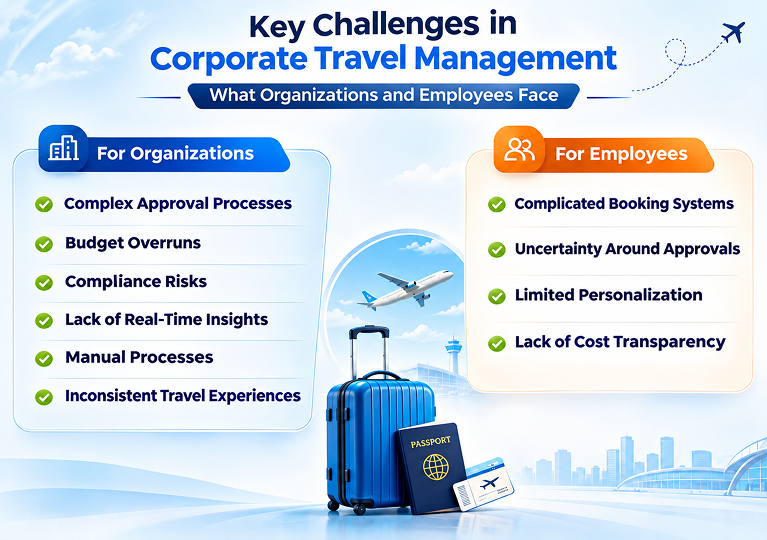
1. Complex Approval Processes
Managing multi-level travel approvals can be time-consuming and inefficient. Delays in approval workflows can affect travel schedules, create frustration, and complicate business trip planning.
2. Budget Overruns
Without proper travel expense controls, costs can exceed allocated budgets. This makes financial forecasting difficult and reduces an organization's ability to manage travel spending effectively.
3. Compliance Risks
Organizations must ensure that employee travel follows internal policies and applicable regulations. Maintaining compliance becomes more challenging when managing multiple departments, destinations, and travel requirements.
4. Lack of Real-Time Insights
Limited visibility into travel spending and booking activities makes it difficult for management teams to identify spending patterns, monitor expenses, and make informed decisions.
5. Manual Processes
Manual booking, approval, and expense-reporting activities increase administrative workloads. They can also lead to delays, errors, and unnecessary operational effort.
6. Inconsistent Travel Experiences
Different booking processes and service providers can create inconsistent employee experiences. This may affect employee satisfaction and make it harder to maintain standardized travel arrangements.
Corporate Travel Management Challenges for Employees
1. Complicated Booking Systems
Employees may struggle to navigate complicated booking platforms and find suitable travel options that comply with company policies. This can make planning business trips frustrating.
2. Uncertainty Around Approvals
A lack of real-time approval updates can leave employees uncertain about their travel status. This may result in confusion, last-minute changes, and scheduling difficulties.
3. Limited Personalization
Employees have individual travel preferences, but these must often be balanced with company policies and budget restrictions. Finding suitable options within these guidelines can be challenging.
4. Lack of Cost Transparency
Employees may not have clear visibility into travel expenses, spending limits, or reimbursement progress. This can create uncertainty and delay expense approvals and reimbursements.
How Businesses Can Improve Corporate Travel Management
Addressing corporate travel challenges requires a more organized and transparent approach. Businesses can improve travel operations by focusing on:
-
Simplified Approval Workflows: Establish clear approval processes to reduce delays.
-
Better Expense Management: Monitor travel budgets and expenses more effectively.
-
Improved Policy Compliance: Make travel policies easier to understand and follow.
-
Greater Travel Visibility: Improve access to booking and expense information.
-
Reduced Manual Work: Streamline repetitive booking, approval, and reporting activities.
-
Better Employee Experience: Make travel planning and expense processes easier for employees.
These improvements can help organizations manage travel operations more efficiently while providing employees with a smoother business travel experience.
Conclusion
Corporate travel management involves balancing business requirements with employee expectations. Complex approvals, budget overruns, compliance risks, manual processes, and limited cost transparency can create challenges across the entire travel process.
By identifying these roadblocks and improving workflows, expense visibility, and coordination, organizations can make business travel more efficient and manageable.
A well-organized corporate travel management approach helps businesses maintain better control over travel activities while supporting a consistent and convenient experience for employees.
Leave a reply