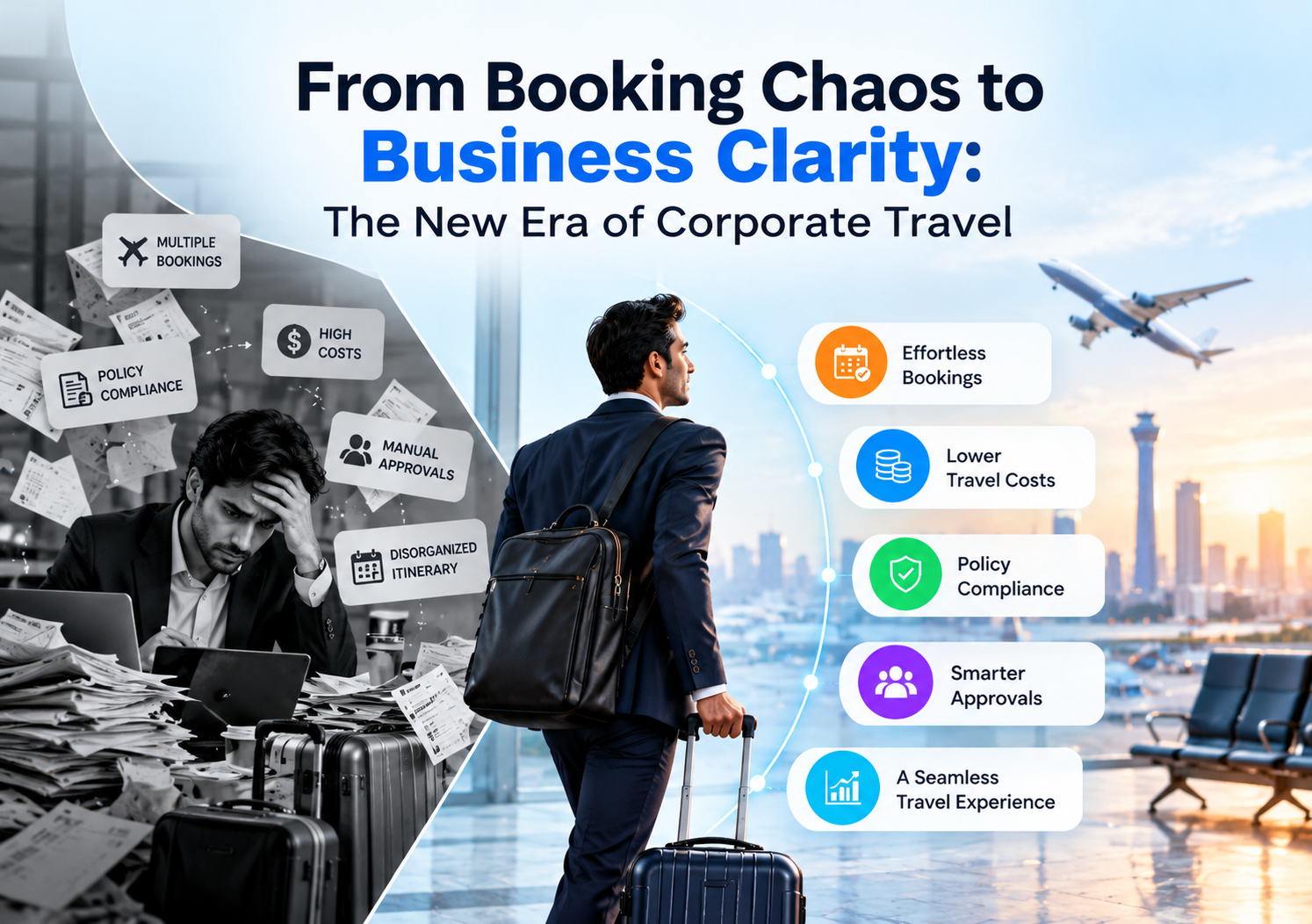


Corporate travel is an essential part of business growth, helping organizations build relationships, attend industry events, meet clients, and explore new markets. However, managing business travel can become complicated when bookings, approvals, travel policies, expenses, and employee itineraries are handled across multiple systems.
From last-minute flight changes to unexpected expenses and manual approval processes, these challenges can create unnecessary administrative work. Businesses need a smarter, more organized approach to corporate travel management that improves visibility, simplifies planning, and supports better decision-making.
Why Traditional Corporate Travel Management Can Be Challenging
Many organizations still depend on emails, spreadsheets, separate booking platforms, and manual processes to coordinate business trips. While these methods may work for occasional travel, they can become difficult to manage as employee travel requirements grow.
Without a centralized process, travel managers may struggle to maintain visibility into bookings, monitor expenses, enforce company policies, and coordinate changes. Employees may also spend valuable time searching for suitable travel options, requesting approvals, and managing reimbursement documentation.
These disconnected processes can lead to delays, inconsistent policy compliance, limited expense visibility, and a frustrating experience for both employees and administrators.
Moving from Booking Chaos to Business Clarity
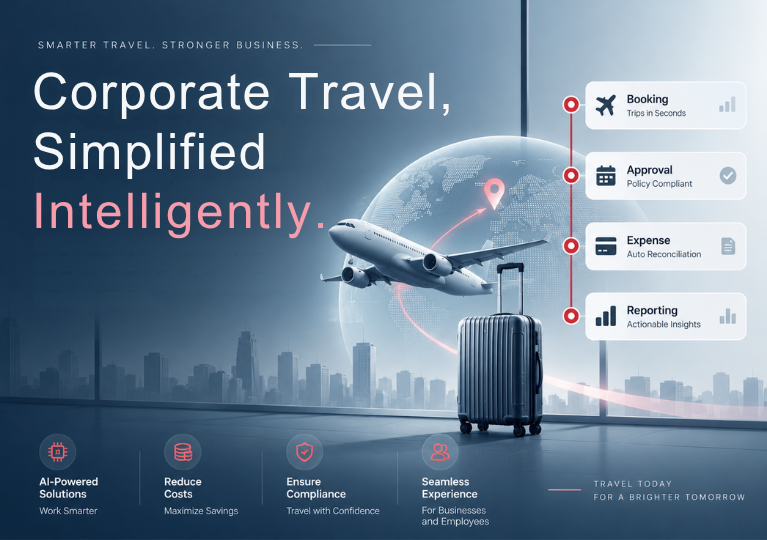
Modern corporate travel management focuses on connecting the different stages of a business trip through a more organized workflow. Instead of managing bookings, approvals, itineraries, and expenses separately, businesses can adopt technology-driven processes that make travel coordination easier to oversee.
A centralized approach can help travel managers access important trip information, maintain clearer records, coordinate approvals, and improve communication with employees. It also helps organizations establish consistent procedures for planning and managing business travel.
The goal is not simply to book flights and hotels faster. It is to create a more predictable, transparent, and efficient travel experience for the entire organization.
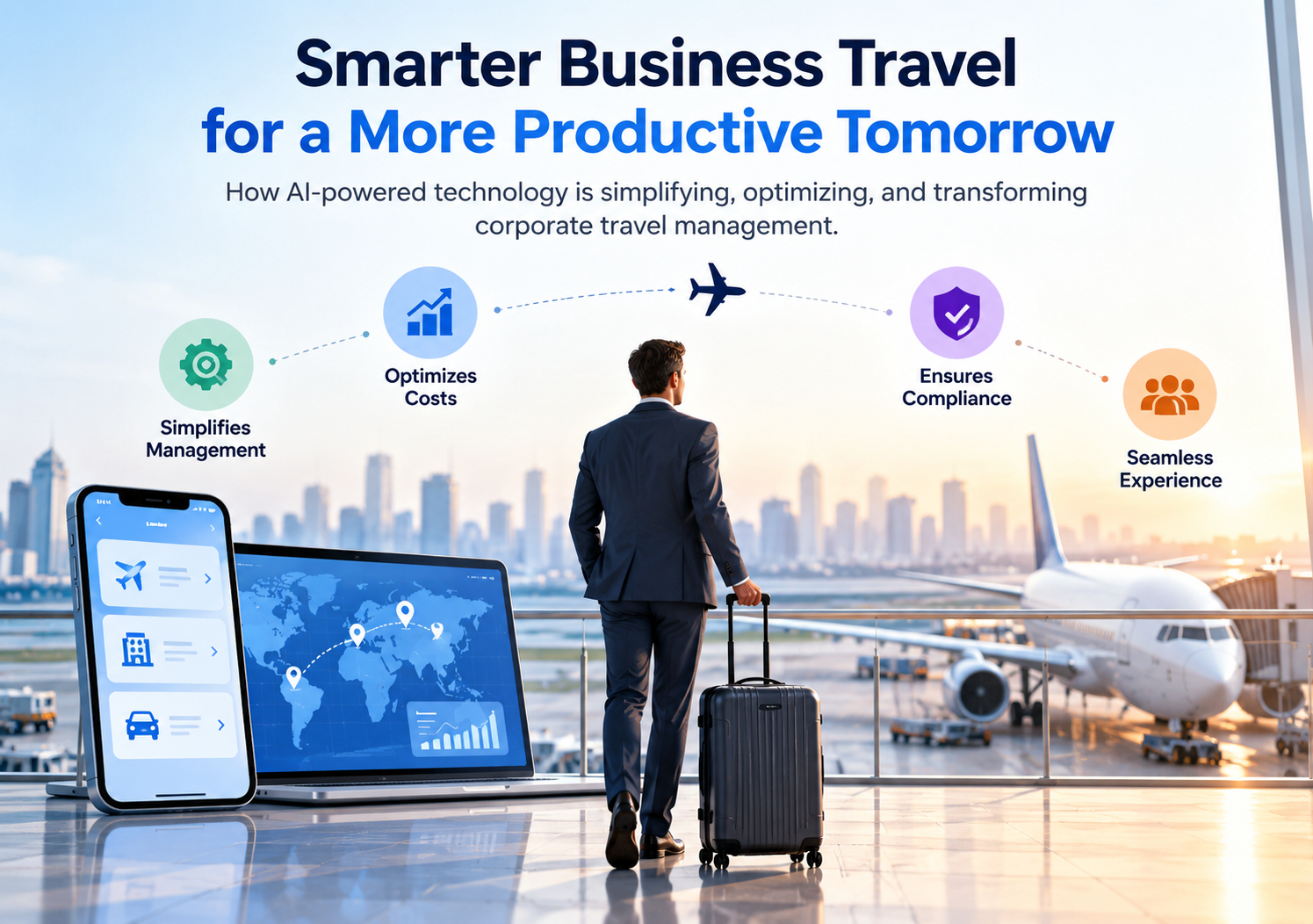
How Technology Makes Business Travel Smarter
Technology and automation can simplify several aspects of corporate travel management. Digital booking workflows help employees organize travel requests, while structured approval processes make it easier for managers to review plans before reservations are confirmed.
Integrated travel information can also improve visibility into itineraries and travel expenses. When relevant information is available in one place, organizations can spend less time coordinating routine administrative tasks and more time focusing on business priorities.
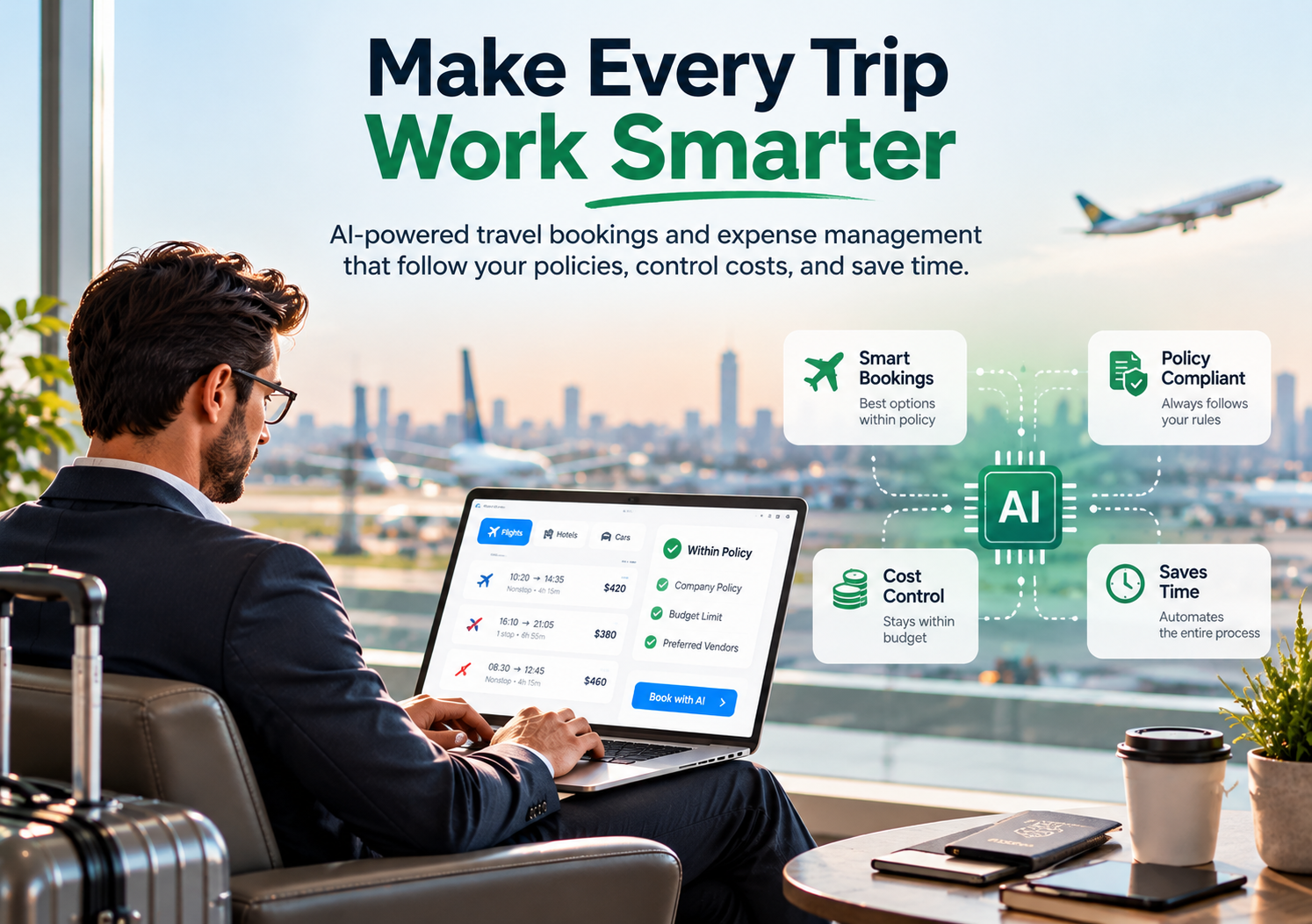
Artificial intelligence can further support travel management by helping analyze travel patterns, identify spending trends, and provide insights that assist decision-making. Depending on the capabilities of the platform, AI-powered tools may also help surface relevant travel options and support more personalized planning.
The effectiveness of these tools depends on data quality, system integrations, company policies, and how the organization implements them.
Controlling Corporate Travel Costs Without Compromising Employee Experience
Travel budgets are an important consideration for every organization. However, reducing travel costs should not mean creating unnecessary difficulties for employees or compromising essential business requirements.
A well-structured travel management process can help organizations establish booking guidelines, monitor spending, identify recurring expenses, and evaluate travel choices against company policies. Better visibility makes it easier to understand where travel budgets are being used and where improvements may be possible.
Organizations can also review historical travel data to identify patterns such as frequent last-minute bookings, recurring routes, and opportunities for better planning. These insights can support more informed budgeting and help businesses balance cost control with employee convenience.
Improving Policy Compliance and Approval Workflows
Corporate travel policies help businesses establish clear expectations for bookings, accommodation, transportation, spending limits, and approval requirements. However, policies are difficult to manage when employees and administrators rely on disconnected communication channels.
Digital workflows can make approval responsibilities clearer and help ensure that travel requests are reviewed through the appropriate process. Accessible policy information also helps employees understand travel requirements before making arrangements. With more organized records and consistent procedures, travel managers can improve oversight, reduce avoidable confusion, and support more transparent corporate travel operations.
Creating a Better Business Travel Experience
A successful corporate travel program must work for both the organization and its employees. Employees need convenient booking processes, clear itineraries, timely approvals, and access to important travel information. Businesses need control over spending, visibility into travel activity, and confidence that established policies are followed.
Simplifying these processes can reduce administrative friction and make business trips easier to coordinate. Clear communication and well-organized travel information can also help employees prepare for their journeys and focus on the purpose of their trips.
When travel processes are easier to understand and manage, organizations can create a more consistent experience across departments and locations.
Choosing the Right Corporate Travel Management Approach
Every organization has different travel requirements. A suitable corporate travel management solution should align with the company's size, travel frequency, approval structure, budgeting requirements, and existing business systems.
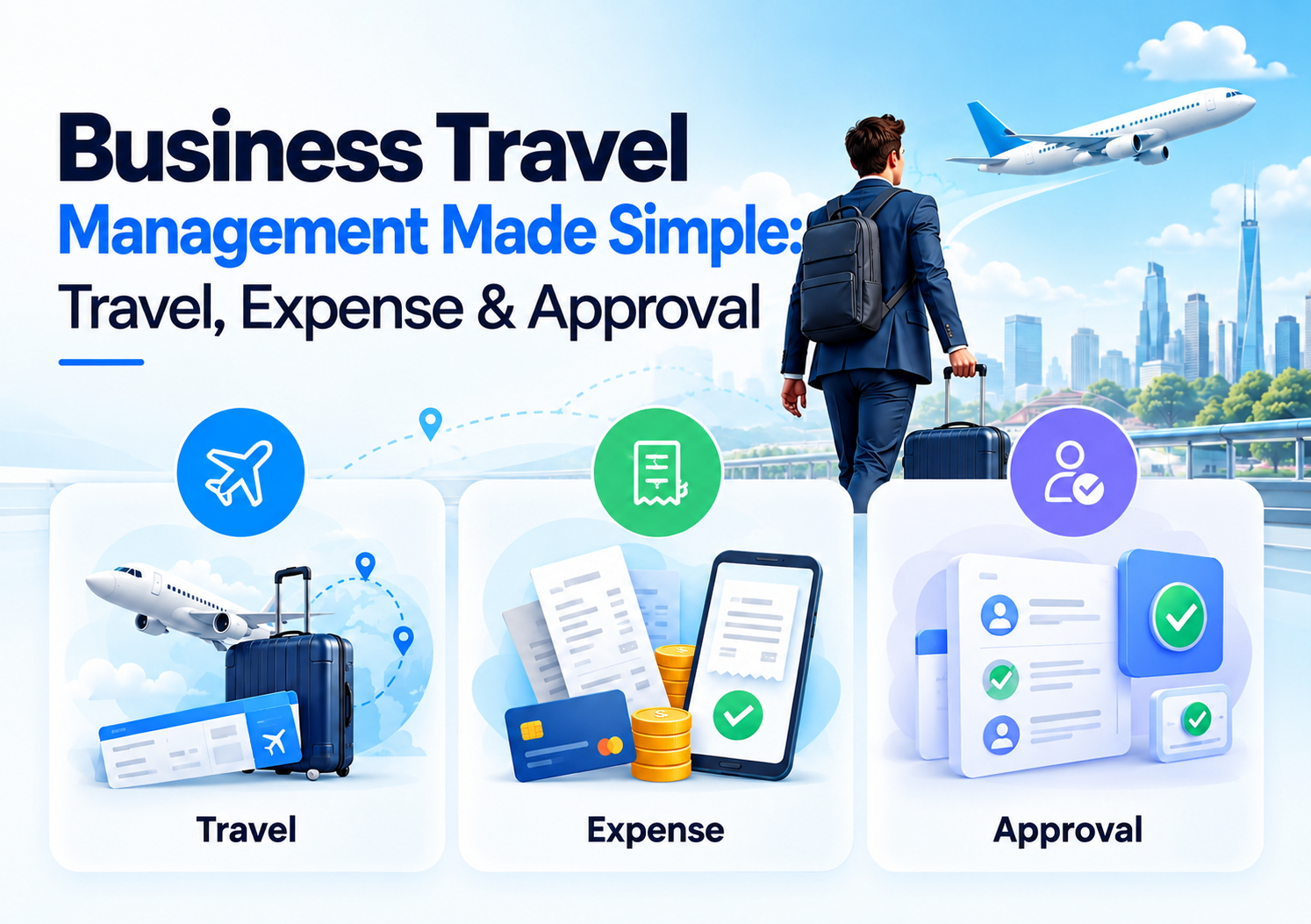
Businesses should evaluate how a platform handles booking workflows, policy management, approval processes, itinerary visibility, expense tracking, reporting, and employee support. Integration capabilities and ease of use are also important considerations when selecting a solution. Rather than focusing only on individual features, organizations should consider how effectively the overall process connects employees, travel managers, finance teams, and decision-makers.
Conclusion: Make Every Business Trip More Organized
Corporate travel does not have to involve scattered information, complicated approvals, and limited expense visibility. By adopting structured workflows and appropriate technology, organizations can move from fragmented travel coordination toward a more connected and transparent management process.
Better planning, clearer policies, improved expense visibility, and convenient employee experiences can help businesses manage travel more effectively while supporting their broader operational goals.
TripSmart is committed to transforming corporate travel management through technology designed to simplify processes, optimize efficiency, support compliance, and improve the experience for businesses and employees. As corporate travel continues to evolve, a smarter and more connected approach can help organizations make every business journey easier to manage.
Leave a reply