How AI Is Making Business Travel Smarter, Faster, and More Cost-Effective
Posted on: 31 August, 2026
How AI Is Making Business Travel Smarter, Faster, and More Cost-Effective
Business travel is essential for companies that need to meet clients, attend conferences, build partnerships, and manage distributed teams. However, arranging flights, hotels, approvals, expenses, and travel policies can become time-consuming as organizations grow.
Traditional corporate travel management often depends on emails, spreadsheets, manual approvals, and disconnected booking systems. These processes can create delays, increase administrative work, and make it difficult for businesses to maintain control over travel spending.
Artificial Intelligence (AI) is changing this process. AI-powered corporate travel management can help businesses automate repetitive tasks, provide smarter booking recommendations, improve policy compliance, and gain better visibility into travel expenses.
Why Businesses Need Smarter Travel Management
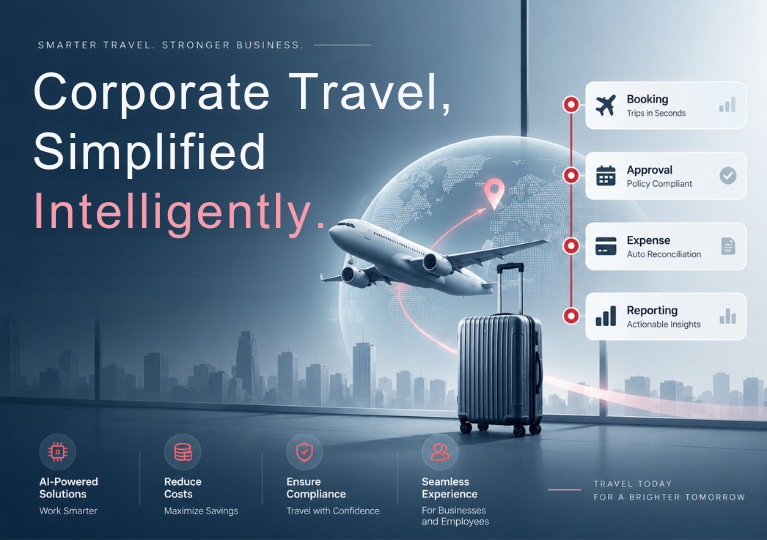
Corporate travel involves more than simply booking a flight or hotel. A typical business trip can include a travel request, manager approval, flight and hotel selection, policy verification, expense submission, reimbursement, and financial reporting.
When these activities are managed manually, employees and finance teams can spend significant time coordinating information.
A modern travel management platform brings these processes together, helping organizations improve efficiency while maintaining better control over travel budgets.
How AI Is Transforming Business Travel
AI can analyze travel preferences, company policies, budgets, and available travel options to make the booking process more intelligent.
Instead of forcing employees to search through multiple options manually, AI-powered systems can provide recommendations that consider travel dates and destination, employee preferences, company travel policies, available budgets, flight and hotel options, and overall cost and time efficiency.
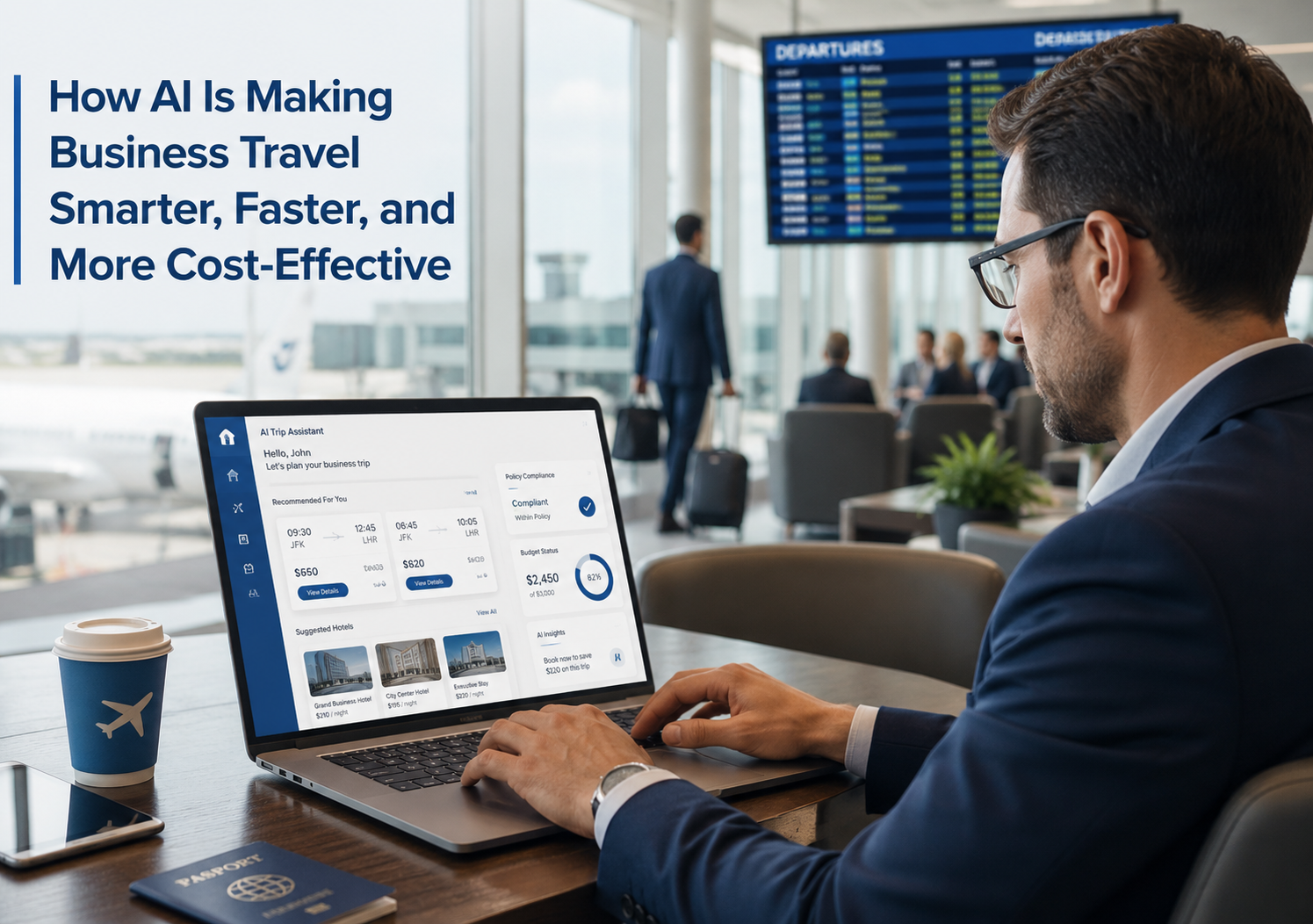
One of the biggest advantages of AI in corporate travel is intelligent booking.
After a travel request is approved, TripSmart can provide curated flight and hotel options based on the employee's preferences, travel dates, and company policies.
This can reduce the time employees spend comparing different travel options while helping businesses keep bookings aligned with established policies.
AI can also help balance cost, convenience, timing, and employee preferences, rather than simply recommending the cheapest available option.
2. Better Travel Policy Compliance
Corporate travel policies are important for controlling costs and maintaining consistent spending standards.
However, manually checking every booking against company rules can be difficult.
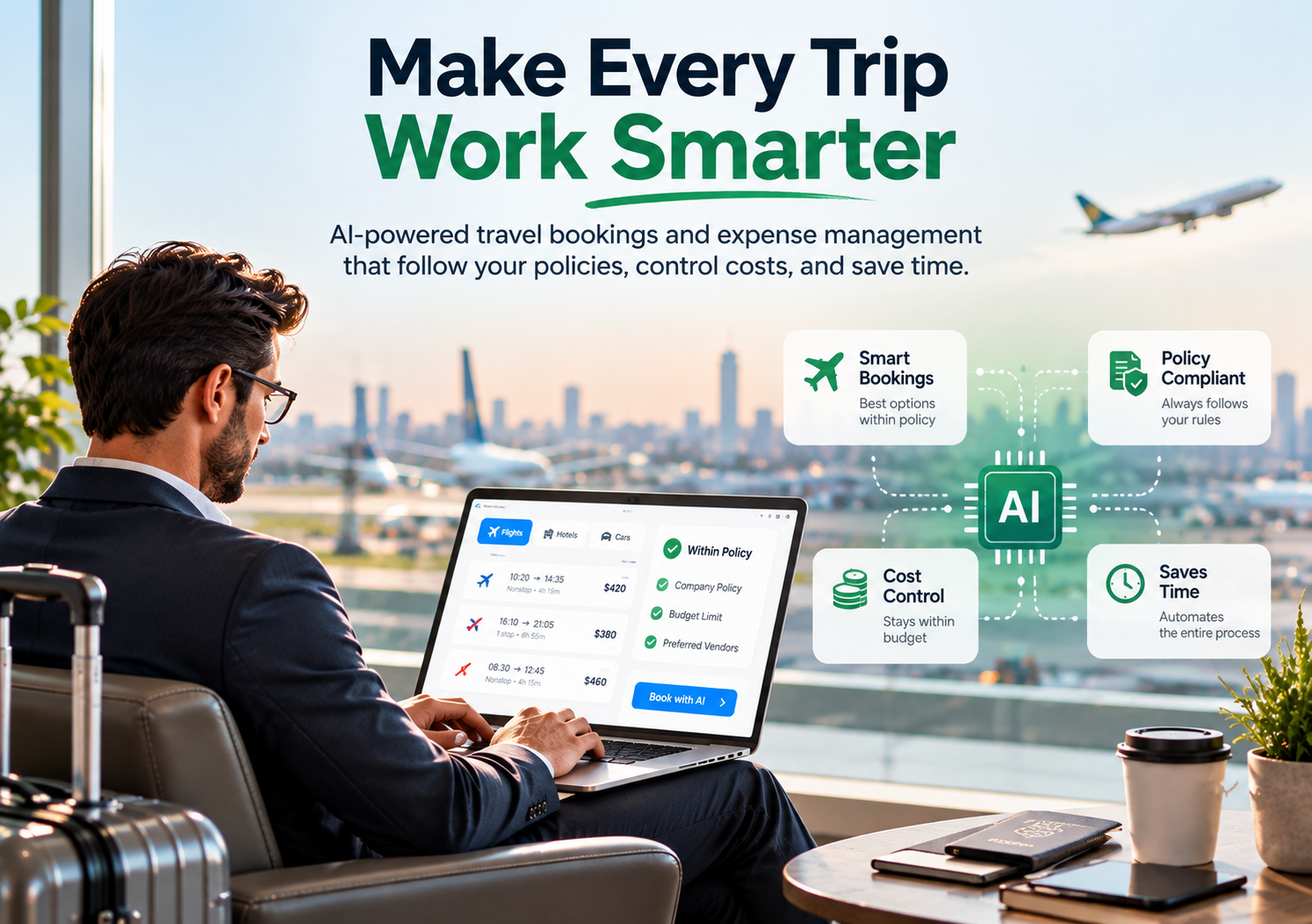
AI-powered travel management can automatically evaluate available options against predefined policies. This helps employees select compliant options while reducing the administrative burden on managers and finance teams.
TripSmart includes policy and compliance monitoring as part of its travel and expense management capabilities.
3. Faster Travel Approvals
Travel approvals can become a bottleneck when requests are handled through emails or manual processes.
An automated approval workflow allows employees to submit travel requests and managers to review them efficiently. TripSmart supports customized approval workflows and real-time travel request status, helping organizations create a more structured approval process.
Faster approvals mean employees can move from planning to booking without unnecessary delays.
4. More Effective Expense Management
Business travel does not end when an employee books a flight. Companies also need to manage receipts, expenses, reimbursements, and financial reporting.
AI-powered expense management can reduce manual data entry and improve the accuracy of expense processing.
Modern platforms can help organizations track employee expenses, upload and manage receipts, automate expense workflows, speed up approvals, improve reimbursement processes, and identify spending patterns.
TripSmart provides expense tracking and submission capabilities, while its higher-tier plans include automated expense tracking with OCR and advanced analytics.
5. Improved Cost Control
Travel is a significant business expense, so companies need visibility into where their travel budgets are going.
AI can analyze historical and current travel data to identify spending patterns and potential opportunities for cost optimization.
Instead of looking at individual transactions in isolation, businesses can use travel analytics to understand which destinations cost the most, where employees are spending more than expected, how travel patterns are changing, where policies may need improvement, and which travel options provide better value.
TripSmart provides budget oversight, expense analytics, cost optimization, and data-driven insights to support better financial decision-making.
6. A Better Employee Travel Experience
Employees should be able to focus on their business objectives rather than spending hours managing travel administration.
A centralized travel platform can bring travel requests, approvals, bookings, and expenses into a connected workflow.
This creates a smoother experience from the initial travel request through expense management after the trip.
AI and the Future of Corporate Travel
The future of corporate travel management is becoming increasingly automated and data-driven.
AI-powered platforms will continue to improve predictive travel planning, intelligent itinerary optimization, automated expense analysis, personalized recommendations, real-time policy monitoring, budget forecasting, travel spending insights, and automated approval workflows.
As companies expand their teams and travel requirements, connected travel and expense management systems can help them scale without increasing administrative complexity.
Why Businesses Should Adopt AI-Powered Travel Management
Organizations that continue relying entirely on spreadsheets, emails, and disconnected booking tools may struggle with limited visibility and inefficient processes.
AI-powered corporate travel management offers a more connected approach by bringing travel booking, approvals, expenses, compliance, and analytics into one workflow.
The result can be less manual work, better compliance, greater cost visibility, faster processes, and an improved employee experience.
For businesses managing frequent employee travel, these improvements can make a meaningful difference to both operational efficiency and overall travel spending.
Conclusion
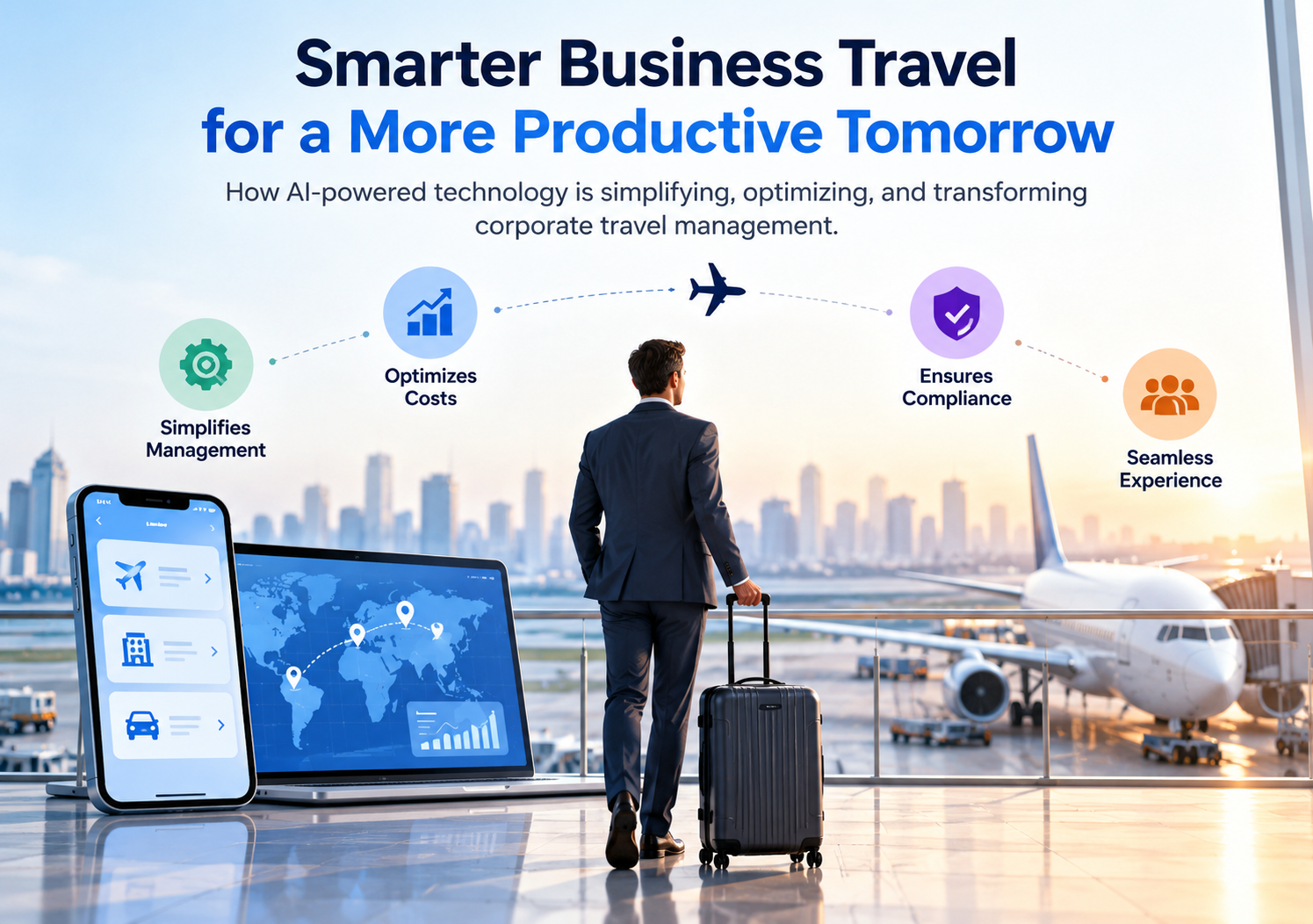
AI is making business travel smarter, faster, and more cost-effective by transforming how companies plan trips, approve requests, book travel, manage expenses, and control budgets.
Instead of relying on fragmented processes, businesses can use AI-powered travel management to connect these activities into a more efficient workflow. Smart recommendations can simplify bookings, automated approvals can reduce delays, expense management can improve financial visibility, and analytics can help organizations make better travel decisions.
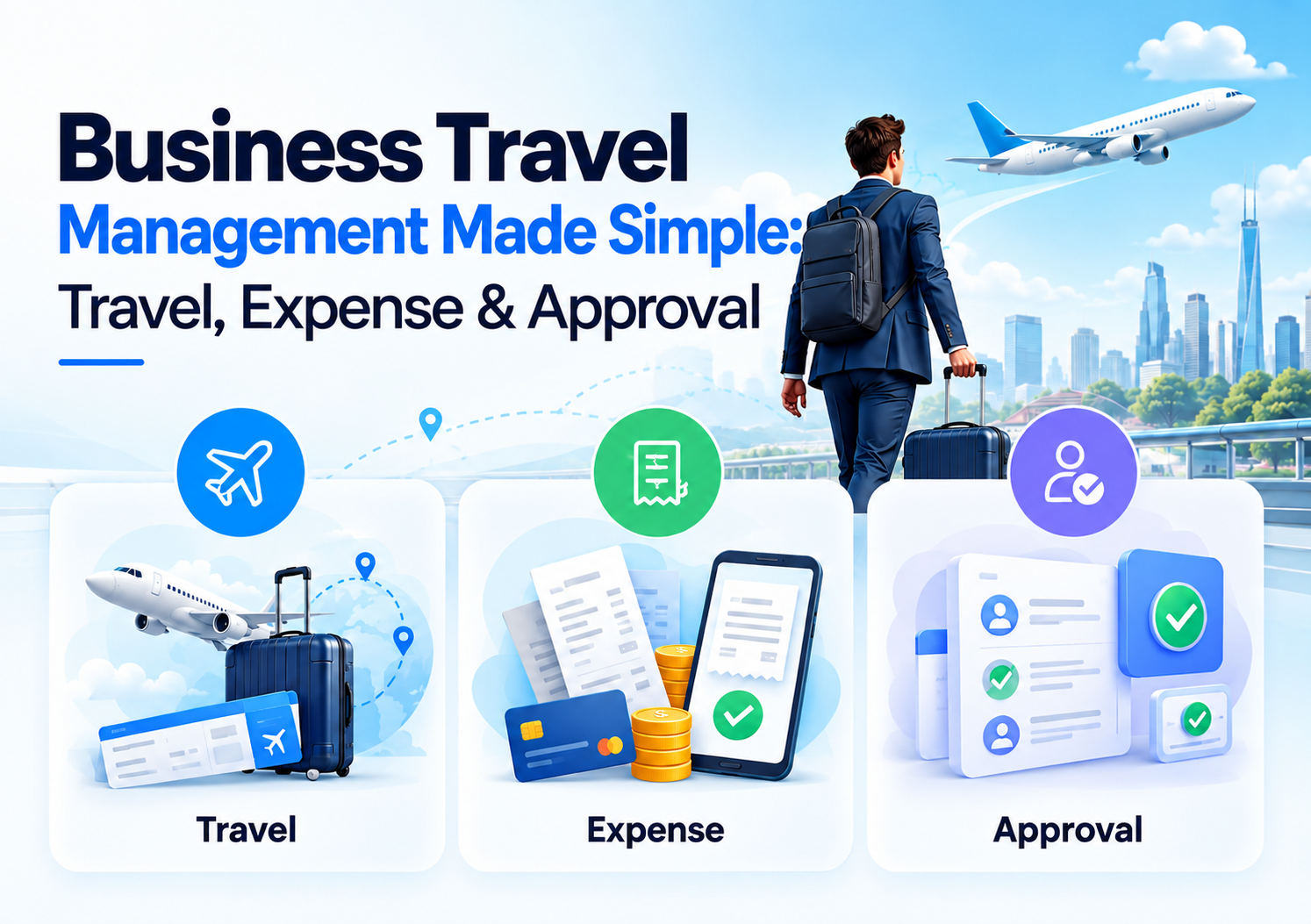
TripSmart brings together travel management, expense tracking, approval workflows, policy compliance, and AI-powered booking capabilities to help organizations manage business travel more efficiently.
As corporate travel continues to evolve, AI-powered travel management is becoming an important tool for businesses looking to reduce costs, improve productivity, and create a better experience for their employees.



Leave a reply